What Does "Organic" Actually Mean in Canada?
The word “Organic" is everywhere, whether you are shopping online or at the grocery store. Organic Produce. Organic chicken. Organic granola in a bag that costs more than the one beside it. It's one of the most powerful words in food marketing — and also one of the most quietly abused. So it's worth asking the plain question: in Canada, does "organic" actually mean anything, or is it just a word you're paying extra for? Especially when it's all over the internet. Is it a real thing or just another social media hype?
The honest answer is yes, it means something — but it depends on where and how it is labelled. Whether you can verify it or not.
The federal system: real, and stricter than most people think
At the national level, "organic" is not just hype or some trendy word. It's a regulated claim, and they take it seriously.
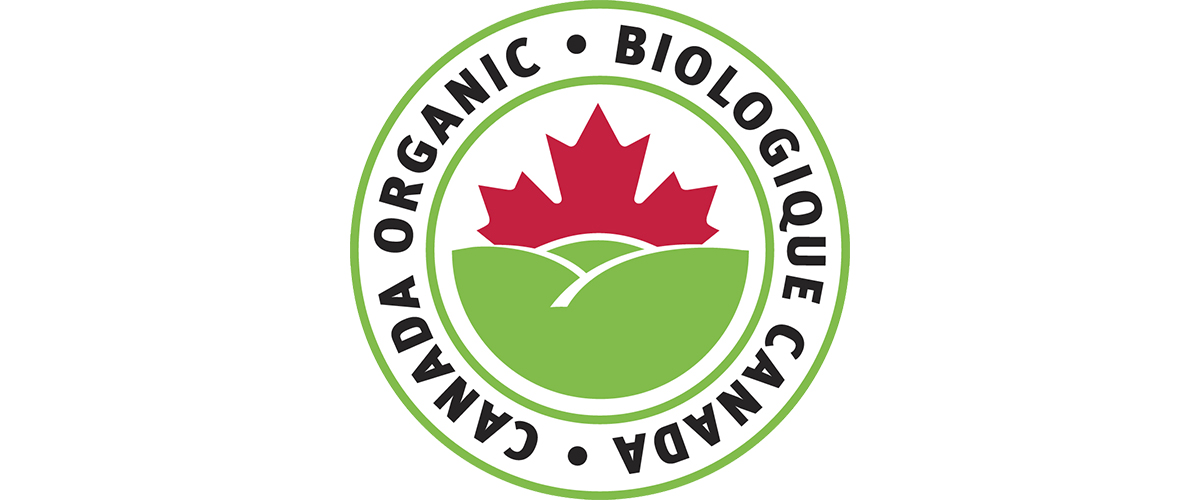
Any food, seed, or livestock feed sold across provincial or territorial borders, imported, exported, or carrying the Canada Organic logo has to be certified under the Canada Organic Regime — a system written into the Safe Food for Canadians Regulations and overseen by the Canadian Food Inspection Agency. To earn this certification, an operation has to meet the strict Canadian Organic Standards, which spell out exactly what's permitted in production, and which substances are banned outright. There are guidelines depending on the industry that producers or sellers have to meet in order to get certified.
The certification itself isn't a form you fill out and forget. It's not a one-time thing. There's an application, a detailed accounting of every input and process, and an on-site inspection by an accredited certification body before anything is granted. Those bodies are themselves audited by verification bodies designated by the CFIA(Canadian Food Inspection Agency), who answer to the CFIA in turn. It's a chain of oversight designed so that no one grades their own homework.
A few things worth knowing about
-
Producers can only put the “Canada Organic” logo on products that are 95% or more organic. Seeing it is a genuine signal.
-
Anything claiming 70% or more organic ingredients has to name the certification body that stands behind it — so you can trace the claim back to a real auditor.
-
Certification can be suspended or cancelled. An operator who loses it can no longer sell those products as organic, and trying to anyway is an offence.
So when the system applies, it has teeth. The problem is the gap where it doesn't.
British Columbia decided to close the door
If you're shopping in BC, the story is better than the national baseline — and this is the part that matters most for anyone buying here.
Since September 2018, "organic" is a protected term in British Columbia under the province's Organic Certification Regulation. Any agricultural or aquaculture product produced or processed in BC and marketed as organic has to be certified — either federally, or through the BC Certified Organic Program. The protection extends past the exact word, too: abbreviations, symbols, and phonetic spellings all count. So, in a nutshell, in B.C., you cannot just throw around the word "organic" without being fully certified, and if you do, there are consequences.
In other words: in BC, the word finally has to be earned.
How to actually verify it in the wild
You don't need to memorize regulations to shop well. Three quick checks do most of the work:
-
Look for a logo you can trust — the Canada Organic logo, or BC's Checkmark. Both require 95%+ organic content and real certification.
-
Read for a "certified organic by" line. Displaying a logo is Optional, so many legitimately certified products skip it. But a named certifying body is a claim you can trace.
-
When in doubt, ask who certified it. A producer doing the work will answer instantly. Vagueness is its own answer.
Where we land on it
At Cow Wings, we think the more useful question isn't just "is it organic?" — it's "can this claim be traced back to someone accountable?" Certification is one strong way to get there. Knowing exactly which BC farm raised the animal, and how, is another. Both beat a word printed on a package by a chain that would rather you not ask. At Cow Wings, we let you know the source. Cow Wings offers 100% Satisfaction Guaranteed. At Cow Wings, “Organic” is not just a word; it's a promise of quality sourced locally.
That's the standard we hold our own sourcing to: real provenance from BC farms, flash-frozen to lock in quality, and a supply chain we can actually explain — at a price that doesn't treat "ethical" as a luxury add-on.
The bottom line: "Organic" in Canada is meaningful when it's certified — federally, or provincially in places like BC that have closed the loophole. It's weakest exactly where you'd least expect: a local product sold close to home. So don't buy the word. Buy the certification behind it, or the producer who'll tell you the whole story without being asked.